Hateful to me as the gates of Hades is that man who hides one thing in his heart and speaks another…
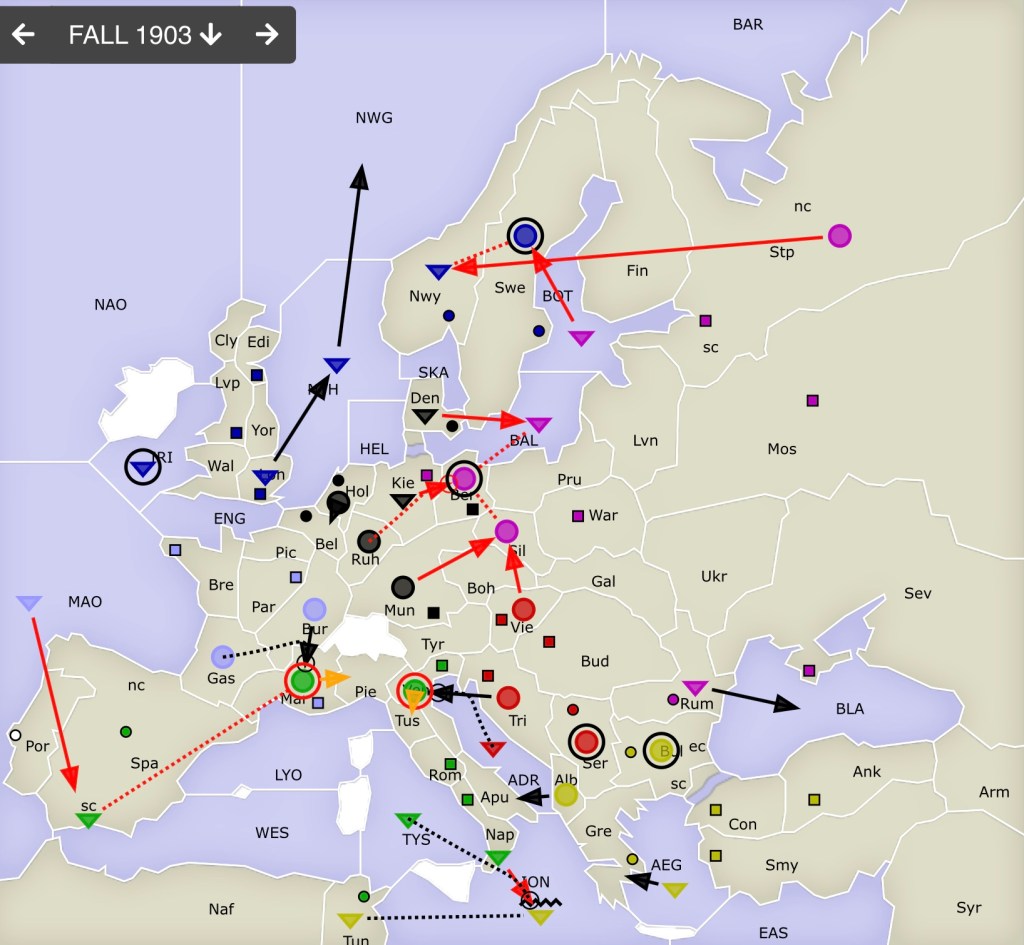
Chaos has engulfed the European theatre, as multiple powers make bold moves to secure their future against increasingly existential threats. France has finally managed to excise the Italian expeditionary force from within their borders, forcing them to retreat back into the Cisalpines. Fierce fighting between the French and Italian navies off the coast of Gibraltar also denied the expeditionary force the support it needed to hold its position.
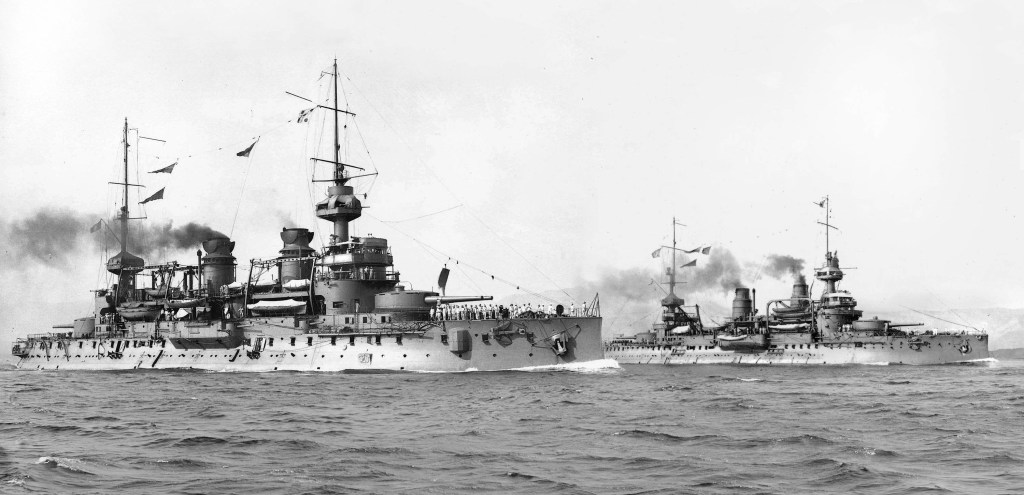
The kingdom of Italy has fared little better at home. Austrian forces have gained control of Venice, forcing the Italian Home Army further south into Tuscany. The Italian fleet stationed off the coast of Naples affected some skirmishes with the Ottoman fleet lurking off the Italian coast, but this was not enough to disrupt the landing of Ottoman ground troops in Apulia. There now seems to be a race between Italy’s neighbours over who can claim Rome first – will the star and crescent fly above the Palatine before Spring, or will there be Austrian jackboots marching through the capital?
‘Italy has a large appetite and rotten teeth.’ – Otto von Bismarck
As the Ottoman advance into Italy continues apace, it’s easternmost fleet reoccupies Greece in order to protect against a presumed Austrian incursion. A few short years ago Austria would have been merely a roadblock to Ottoman conquest of the Balkans, but a tenacious Kaiser has not only reclaimed Austria’s capital, but expanded its territory along with its military capacity. If the Sultan wishes to continue his territorial expansion further from the coast, away from the power of his formidable fleets, he will find Austria a tough nut to crack. The Ottoman army’s achievements should not be dismissed however – this is the first invasion of Italy by a foreign power in almost 100 years.
Austria’s fledgling kingdom goes from strength to strength, particularly the aforementioned annexation of Venice. With a fleet in the Adriatic, Austrian forces are well placed to both continue their conquest of a beleaguered Italy, as well as repulse any further Ottoman incursions. To the north there was an unsuccessful attempt to take Silesia from the Russian forces occupying the region, although this did tie up the Russian army from offering support to the besieged army that occupies Berlin.
This season has also marked the first German count-offensive since losing Berlin to the Russians earlier in the year. The German army clashed with Russian forces in Silesia but was unable to dislodge them, and to the north the German navy failed to make any headway against the well defended Russian forces occupying Berlin. I am informed that signalling errors sent to the German battalion stationed in the Ruhr ordered the commander to assist in the retaking of Berlin – this confused the commander somewhat as he was stationed over 300 miles away from the attack!
Off the coast of Denmark, Germany’s North Sea fleet intercepted its Russian counterpart and prevented supplies reaching Berlin, but this was not quite enough to dislodge the enemy. To the west, German forces also moved in to occupy their undefended frontier in Belgium – is this the first step in a German invasion of France? With the annexation of Berlin by Russia looking increasingly secure, the Kaiser must be looking elsewhere for the resources to keep his forces supplied.
Across the Channel, the English navy has left port and set sail into the North Sea and beyond. Russian attempts to enter Sweden have been repulsed by a dug-in and resolute English army stationed there, despite support by the navy in neighbouring Norway being delayed by raids from Russian forces based out of St Petersburg. While the English were able to withstand a Russian assault this season, do they have the concentration of forces to launch a successful counter-attack any time soon?
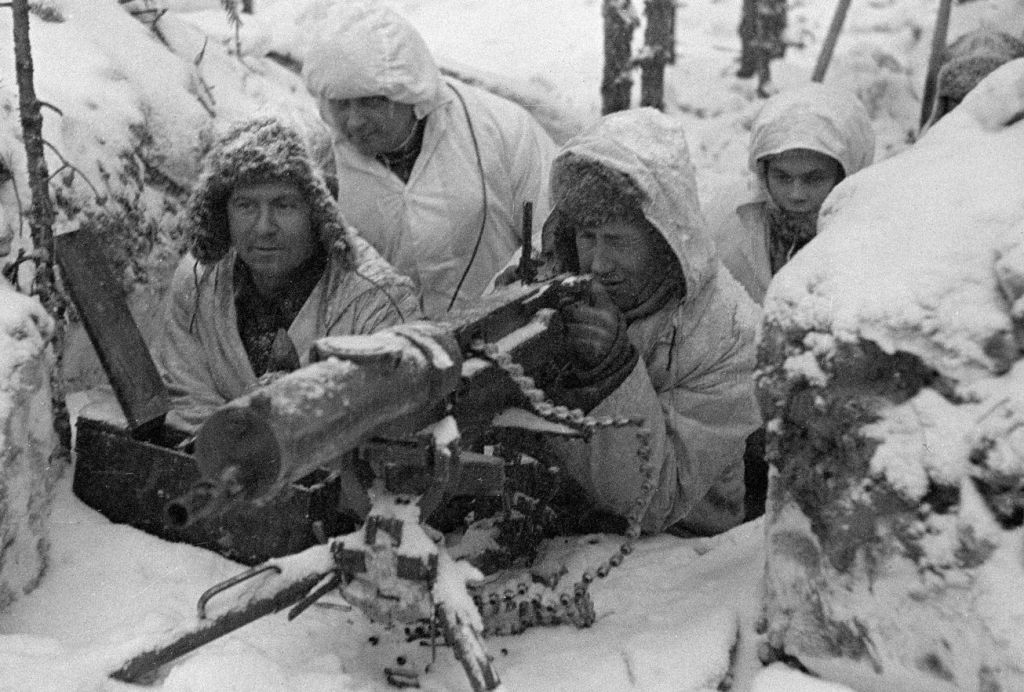
A spectre that has loomed large for other powers this season, Russia has made no tangible gains but neither has it made any losses. Its army in Berlin has withstood a combined German assault, and its fleets in the Baltic remain as threatening as ever to both English and German held provinces. To the south, the fleet stationed in Rumania has finally left port for the Black Sea, an area that up until now has been a neutral zone between Russia and Turkey.
 Diplomatical!