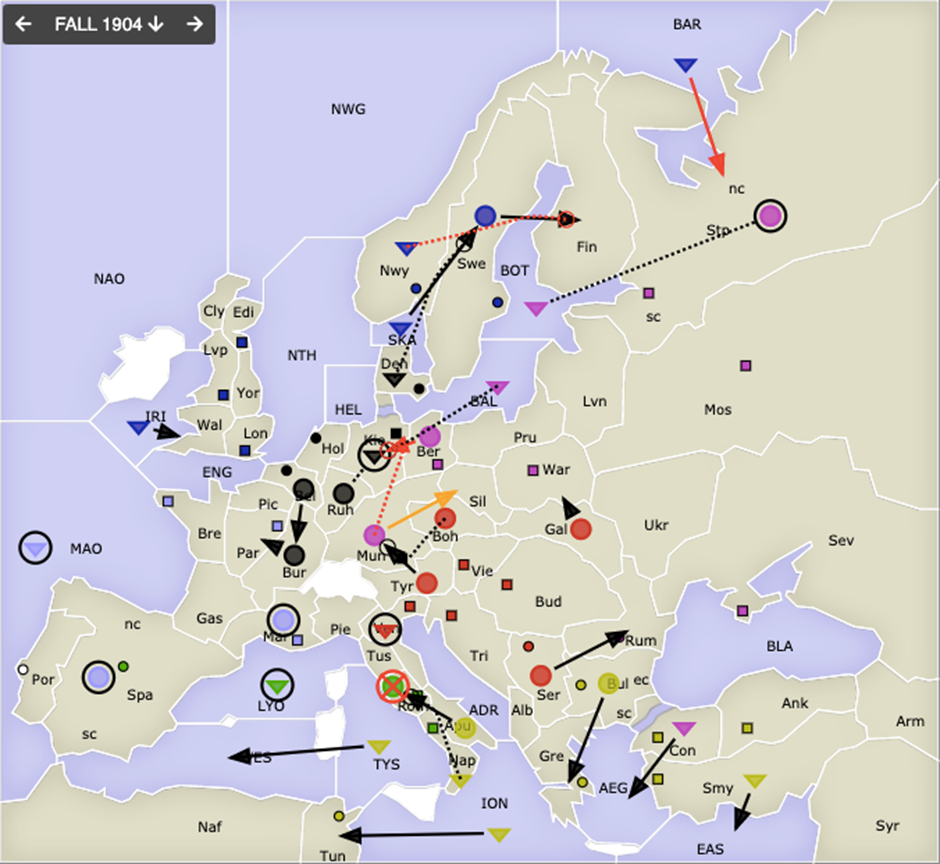
A black day for Christian monarchies across Europe, as the Ottoman Empire once again claims the capital of a great and historic kingdom. Elsewhere, Russia suffers a bloody blow at the hands of the Austrians.
The House of Savoy is no more. After a final, desperate stand on the Palatine, the kingdom of Italy has fallen to the forces of the Ottoman Empire. It is understood that an emissary, under personal orders from the Sultan, offered to spare King Victor Emmanuel III in return for the surrender of the city. General Matteo Albertone, who survived the defence, records this response from the Italian monarch:
“As to surrendering the city to you, it is not for me to decide or for anyone else of its citizens; for all of us have reached the mutual decision to die of our own free will, without any regard for our lives.”
Final form declaration of Victor Emmanuel III, King of Italy
There are no known surviving eyewitnesses to the death of the King, and none of his entourage survived to offer any credible account of his death. Rumours continue to circulate his final words were “This city is fallen and I am still alive”. He then tore off his imperial ornaments so as to let nothing distinguish him from any other soldier and led his remaining troops in a last charge where he was killed.
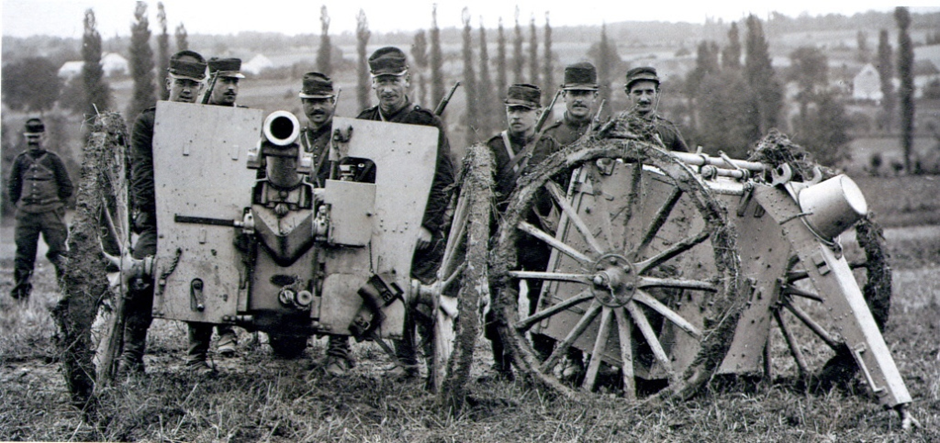
With Italy’s defeat, the Ottoman Empire has positioned itself as the dominant force in the Mediterranean. In less than a year all of Italy has been occupied, save for Venice in the north. With the occupation of Italy’s holding of Tunis on the North African coast, the Empire now has the military capacity to field a force equal to any other power in Europe. Now that Rome is pacified, there are also reports of Ottoman ships sighted off the coast of Algiers, suggesting a move into the West Mediterranean. While France currently occupies Spain, it will not be long before the Sultan is capable of bringing superior numbers to the region.
To the east, the Ottoman army occupying Bulgaria has moved into Greece, potentially in anticipation of an attempt by Austria to claim the region. With the Austrians claiming Bulgaria however, this has created an interesting stalemate in which either power can claim a neighbouring region for themselves. This correspondent anticipates rapid communiques between embassies in the coming months in order to avoid a bitter stalemate.
Italy was not the only country to have its capital occupied by a foreign power this season. Pushed further and further west by a dominating Russia, Germany was forced to send its armies into Paris in order to claim much needed supplies. With its capital now occupied, France will not be able to make use of its occupation of Spain earlier in the year, and will be unable to raise further forces. While the French fleet stationed in the Mid Atlantic can quickly pacify Portugal, this still leaves an Ottoman fleet to the east of Spain and a Germany army with little opposition through all of central France. If not dealt with quickly, these Germany invaders could spell the end for the Republic.
Another big winner this year has been Austria. With a multi-front offensive, Austrian forces have managed to seize three key regions from Russia. With these supplies and industrial capacity now under their control, Austria should be able to almost double their military forces over the winter. There is now a strong defensive line for Austria that stretches from Venice to Warsaw, and with Russian forces decimated, there is likely to be little resistance from the east. Their force in Bulgaria is more isolated, but is likely to be reinforced by the spring. Few could have predicated back in 1901 that a mere three years later Austria would not only survive, but bounce back to become one of the dominant powers in the European theatre. The question now arise as to where Austria will direct its newfound military might – will it clash against an equally powerful Ottoman Empire in the Balkans? Or will it take advantage of a weakened Russia or Germany?
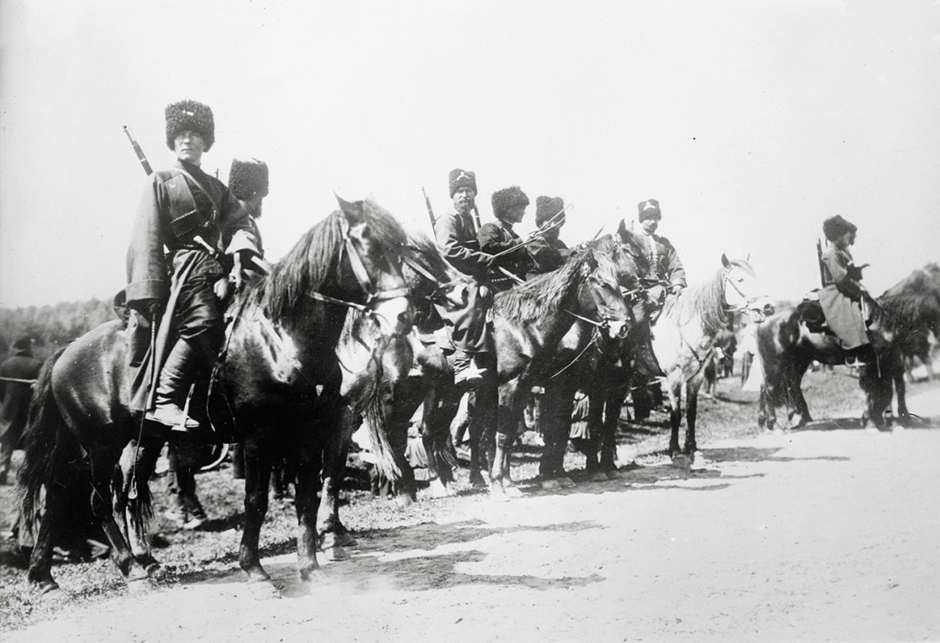
England has had a relatively quiet season, spent mainly repositioning its fleets for a long planned attack on St Petersburg. After a year defending Sweden from repeated Russian assaults, the winter hardened British army has trekked eastwards into Finland, and are now only a stone’s throw from the Russian capital. Closer to home, the newly commissioned fleet has returned to port in Wales after spending a year at sea – it appears Sea Lord is still apprehensive about another amphibious invasion.
After a bit year of retreat after retreat, Germany has held firm against further Russia incursions into their homeland. The dockyards at Kiel were held in a heroic defence of the marines of the Imperial German navy, despite a coordinated attack from Russia on land and sea. This crucial defence has freed up other German forces to push further into France, with the aforementioned occupation of Paris. With German armies in both Burgundy and Paris, the Kaiser has almost free reign into the entire rest of the country.
Finally, Russia has been hit the hardest by the changes in fortune this season. With Austria striking the first blow in this new conflict, Russia has lost the key regions of Warsaw, Rumania and Munich, all critical to the war effort. These attacks also prevented a Russian victory in Kiel, one of the few opportunities for Russia to capture a new region this year. In order to keep their existing forces supplied the Tsar and his generals will be faced with the difficult decision of which to stand down over the winter; it is assumed that the Black Sea fleet will be scuppered, but that still leaves two more forces that will have to withdraw before the end of the year. Whatever decision is made, Russia has gone from the biggest threat in the east to a decidedly more precarious position.
 Diplomatical!